
What paint correction is and how it works
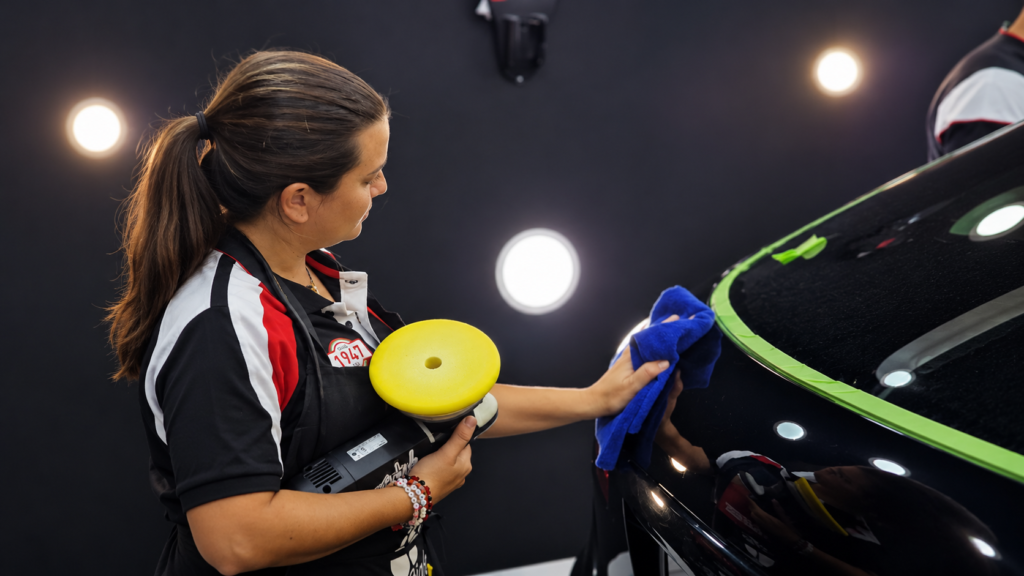
Some cars, even freshly washed, still look tired. The paint is clean, but it doesn’t reflect: in the sun you see circles, fine lines and a kind of haze that dulls the colour. Soap and wax won’t fix that. To restore your car’s paint you have to work on the surface itself, and that’s the job of paint correction, one of the most technical processes in detailing.
What exactly paint correction is
Paint correction is a controlled polishing process that removes defects from the clear coat rather than hiding them. It works by levelling the surface: using a polishing machine, pads and abrasive compounds, a microscopic layer of clear coat is removed until it gets below the mark. Once the surface is flat again, light reflects evenly and the defect disappears.
The key word is controlled. The aim isn’t to remove as much as possible, but just enough for the defect to disappear or be reduced as far as possible, while keeping enough clear coat for the paint to stay protected for years.
Paint correction versus a conventional polish
Many polishing services simply apply a glaze with fillers or silicones. The car comes out shiny, but those products only cover up the defects and, after a few washes, everything reappears. It’s a cosmetic, temporary result.
Polishing a car as part of a correction is something else: the defect is genuinely removed, so the result lasts as long as the paint is looked after. That’s why correction always begins with a diagnosis, not with the machine. Each panel is inspected under specific lights and, where needed, the paint thickness is measured to know how much margin there is to work with.
Which defects can be removed
Well-done paint polishing solves most of the defects that build up with everyday use:
The swirls and holograms left by car wash tunnels, dirty sponges or a poorly done polish. Dried water spots that get etched in when the car dries in the sun. Light scratches that haven’t gone through the clear coat, which are most of those caused by brushing against branches, bags or clothing. And light oxidation, that loss of shine that makes a red or a black look washed out.
With all of this corrected, the car’s shine changes completely. Our gallery clearly shows the difference in paint before and after the process.
The stages of the process
A proper correction, which is the most reliable way to restore a car’s paint, follows an order that shouldn’t be skipped. First, a thorough wash and chemical and mechanical decontamination, so that no particle is left that could scratch during polishing. Then, inspection and masking of rubbers, trim and edges, which are delicate areas.
Next comes the cutting stage, with a more abrasive compound that removes the deeper defects. On heavily damaged paint, it’s followed by a refining stage, with a finer product that removes the haze left by cutting and brings out maximum gloss. Between stages, the panel is wiped down to check the real result, with no oils that could hide anything.
The process always finishes with protection: wax, sealant or ceramic coating. Without it, freshly corrected paint is left exposed and loses some of what was gained far sooner than necessary. You can see the levels of correction and protection in our services.
How far paint correction can go
Not everything can be fixed with polishing. If a scratch has gone through the clear coat into the colour or primer, correction can soften it, but repairing car scratches that deep requires a touch-up or a respray of the area.
The same applies to so-called sun-burnt paint, when the sun has degraded the clear coat so much that it starts to crack or peel. At that point there’s nothing left to level and the only solution is to repaint. Repairing the car’s clear coat in that condition is a job for a body shop, not for detailing.
That’s why it pays to act early, while the paint can still be saved. Restoring your car’s paint at that stage costs less and preserves the original factory finish. If you’re not sure what state yours is in, you can request an assessment and we’ll tell you what can be achieved with it.